
Newsflash

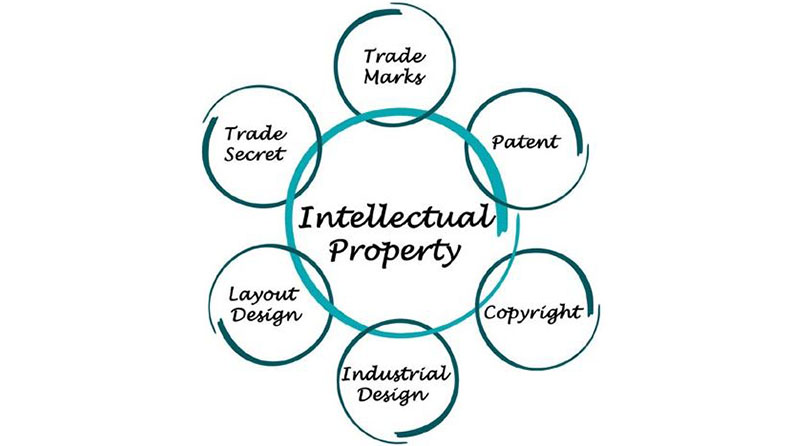
Trademarks are words or other marks, such as logos, used to distinguish the goods/services of the trademark owner from the goods/services of other manufacturers & suppliers. Hence, a mark can be a symbol which may or may not have any particular significance, a person's name or image, a corporate logo, an invented word or an ordinary word, or a distinctive container for goods.

ARIPO Web Portal

ARIPO Web Portal

  • get viagra
  • viagra soft tab
  • viagra substitute
  • africa.jpg

    Advertisement

    Featured Links:
    WIPO
    The World Intellectual Property Organization (WIPO) website
    EPO
    EPO, European Patent Office website
    USPTO
    USPTO, United States Patent and Trademark Office
    UK Intellectual Property Office
    United Kingdom Intellectual Property Office website
    Copyright and Reprography- Uganda PDF Print E-mail
    Tuesday, 15 April 2008 21:43

    GENERAL INFORMATION

    Copyright Law

    The Copyright and Neighbouring Rights Act No. 19 of 2006

    Responsible body

    Uganda Registration Services Bureau

    International Treaties

    TRIPS Agreement and Universal Copyright Convention

    Stipulations on traditional Cultural Expressions/Folklore

    Sections 2 and 5 of the Act provide for folklore as eopyrightable works

    Pending legislation

    Regulations to the Act

    Domestication of the TRIPS Agreement

    Accession to Berne Convention and WCT

    RIGHT TO REPROGRAPHY

    Right of reproduction

    Section 2 of the Act - "means the making of one or more copies of a work or sound recording"

    Right of Reprographic reproduction

    No special stipulation is made in the Act about reprography as a terra

    Exceptions to the right of reproduction

    Section 17 - Non- Exclusive licence. A Ugandan citizen or resident may apply to the Minister for non-exclusive Licence to: reproduce or cause to be reproduced a work which is published or make and publish a translation of a work on certain conditions

    Fair Use

    Section 15 provides that it is not an iniingement of the right of author and consent is not required

    Use should be for private personal use

    Quotations should be acknowledged

    Education, public news, broadcasts, political speeches, judicial proceedings, lectures, sermons etc are examples of Fair use

    COLLECTIVE MANAGEMENT OF RIGHTS

    Regulations or management of rights

    Part VII of the Act provides for: registration, deregistration, criteria requirements, financial standards, and management of Collecting Societies.

    Registration under the Companies Act

    Core objects clause of a CMO - promotion of the economic and social interests of its members through defending their copyright and neighbouring right interests.

    Initial registration to be on probation until the Society proves that it is functioning to best practices

    Government Control

    Registration process supervised by government agency, Financial Audit statements to be approved by Registrar

    Registrar may appoint auditor if society fails to do so.

    Budget of the Society to be submitted to the Registrar for opinion before it is presented to members

    Registrar to approve investment of funds

    Registrar has powers of inspection of Affairs of any Society at anytime

    Registrar can hold an inquiry or direct an inspector to look into the affairs of the Society

    PRINT AND PUBLISHING MARKET

    Publishing of books

    There are many publishing houses but no numbers are available for this report

    Publishing of Newspapers, periodicals, Magazines

    All Newspapers have their own printers and also publish for private market

    Publishing of Scientific journals and scholarly materials

    Most Universities have own printing and publishing facilities

    Publishers Organisations

    Uganda Publishers Association details not available

    AUTHORS AND THEIR ORGANISATIONS

    There are many Associations of authors but due to time, information was not looked for,

    EDUCATIONAL SYSTEM

    Starts with Nursery, Primary Level - 7 yrs

    "Q" Level - secondary School - 4 yrs

    "A" Level - High School/tertiary/College 2 yrs

    University 3 - 5 yrs

    Number of institutions not available for this report

    Education is liberalized: there are both public and private institutions and some public/private partnerships where government aids private institutions

    Number of students: primary school now has over 7,000,000 due to Universal Primary Education

    Secondary level has over 600,000 students

    Universities are now 19 and have over 80,000 /= students

    Main Education Materials used: text books, Lecture notes, photocopied materials

    PHOTOCOPYING FACILITIES

    Are everywhere and very important in reproduction of education materials, copies of all documents for certification and textbooks, laws, deeds etc because originals are expensive for the majority of users

    Cost of photocopying

    one page is at 10 cents of US$

    Photocopying in Institutions

    very common and useful

    LIBRARIES AND READING

    Reading habits are said to be poor

    Reading is done for exams, and news papers. Public research and reading of books out of school has declined

    Literacy Rate

    65% of the population are literate

    Number of Libraries

    All educational Institutions above Primary level have libraries

    Public Libraries are only in a few big regional towns owned by Public Libraries Board

    All institutions like Parliament, Judiciary, Ministries have private Libraries


    Joomla 1.5 Templates by Joomlashack